Source Excavator Valve for Hydraulic Shears, Breakers, and Mining
Explore 30 listings for excavator valve components suitable for hydraulic shears, breakers, and mining operations. Buyers can compare specifications, certifications, and delivery times from verified suppliers offering one-stop service.
Key considerations
Products List


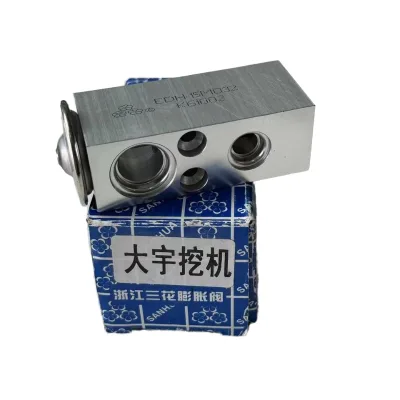


Comprehensive Sourcing Guide
Strategic Sourcing Guide for Excavator Valve Procurement
Navigating the global market for excavator valves requires a disciplined approach that balances technical precision with supply chain reliability. As a critical component within the hydraulic system of heavy machinery, the control valve dictates the efficiency, power, and safety of the equipment. For procurement professionals, the primary challenge lies in distinguishing between generic listings and verified components that meet specific operational demands. This guide synthesizes available market data to provide a framework for evaluating suppliers, understanding technical requirements, and ensuring compliance without relying on unverified claims.
Technical Specifications and Model Compatibility
The foundation of a successful procurement strategy begins with a rigorous definition of technical specifications. Excavator valves are not one-size-fits-all components; they are engineered to interface with specific hydraulic architectures and machine models. In the current market, observed product attributes reveal a diverse range of model numbers, including specific identifiers such as 6I2663, 702-21-09147, and 702-21-55100. These codes are critical for cross-referencing with original equipment manufacturer (OEM) requirements.
Furthermore, the market data indicates that valves are often categorized by their application type, such as "Excavator Hydraulic Control Valve," "Hydraulic Shear Pipeline Control Valve," or "Hydraulic Breaker Pipeline Control Valve." The distinction is vital because a valve designed for a standard digging operation may not withstand the high-pressure demands of a hydraulic shear or breaker attachment. Buyers must verify the transmission type, which is predominantly hydraulic in this sector, and the drive type, typically internal combustion drive for the host machinery.
Compatibility extends to the physical dimensions and capacity of the host machine. Specifications range from small units suitable for 1-80 ton excavators to larger models supporting bucket capacities of 1.0 to 1.5 cubic meters. The "Medium-Sized" classification often appears in listings, suggesting a need for buyers to clarify whether their equipment falls into the compact, mid-range, or heavy-duty category. When evaluating a potential supplier, the buyer should demand a direct mapping between the listed model number and their specific excavator series, such as PC200-6, PC200-7, PC220-8, or PC210, to ensure mechanical and hydraulic compatibility.
Compliance and Certification Verification
In the industrial sector, compliance is not merely a formality but a prerequisite for operational safety and liability protection. The observed market data highlights several certifications, including CE, ISO9001, CCC, CCCF, GS, and GB8013-2005. While the presence of these marks on a product listing is a positive indicator, the procurement process must go beyond visual confirmation.
Buyers should treat certifications as evidence of a supplier's quality management system rather than a guarantee of the specific unit's performance. For instance, ISO9001 indicates that the manufacturing facility adheres to international quality management standards, but it does not certify the specific valve's durability under extreme load. Similarly, CE marking suggests conformity with health, safety, and environmental protection standards for products sold within the European Economic Area, yet the specific application of these standards must be verified against the buyer's local regulatory requirements.
The standard "kg" mentioned in product attributes likely refers to weight classification or a specific standard code, but without further context, it should be treated as an observation rather than a definitive performance metric. When reviewing supplier documentation, procurement teams must request valid, current certificates that are traceable to the specific batch or production run. Relying on generic certification claims without verifying the issuing body's accreditation can lead to significant compliance risks, especially when exporting or importing heavy machinery parts across borders.
Cost Drivers and Pricing Dynamics
Understanding the cost structure of excavator valves is essential for budgeting and negotiation. The observed price range in the market spans from 1 USD to 3650 USD, a variance that reflects differences in complexity, material quality, brand origin, and order volume. This wide spectrum suggests that price alone is a poor indicator of value; a low-cost valve may lack the durability required for continuous mining operations, while a high-cost unit might offer unnecessary features for light-duty applications.
Several factors drive the final cost. First, the customization level significantly impacts pricing. Listings indicate that customization is available, which implies that bespoke engineering for specific hydraulic circuits will incur higher costs than purchasing off-the-shelf standard models. Second, the packaging method influences logistics expenses. Options range from simple carton boxes to polywooden boxes for heavy items, or wooden cases for premium protection. The choice of packaging must align with the shipping method, whether by DHL, UPS, FedEx, or other carriers, to prevent damage during transit.
Additionally, the MOQ (Minimum Order Quantity) plays a crucial role in unit economics. The observed MOQ range is 1 to 100 units, with some specific listings noting an MOQ of 1 set or 1 piece. For buyers requiring large-scale fleet replacements, negotiating a lower unit price through volume commitments is a standard practice. However, buyers must be wary of suppliers who offer extremely low prices with high MOQs, as this may indicate a lack of stock or reliance on low-quality components. The "High Quality" attribute observed in some listings should be corroborated with physical samples before committing to large orders.
Typical Applications and Operational Context
Excavator valves serve a multitude of applications, and selecting the wrong type can lead to system failure or reduced productivity. The market data identifies several distinct usage scenarios. The "Mining Excavator" application suggests a need for valves capable of withstanding harsh environments, high dust levels, and continuous heavy loading. In contrast, valves for general construction or landscaping may have different pressure ratings and flow characteristics.
The specific function of the valve is another critical consideration. Listings distinguish between "Control Valve," "Standby Valve," and "Backup Valve." A standby valve, for instance, is designed to take over in case of primary system failure, requiring a different reliability profile than a primary control valve. Similarly, valves for hydraulic shears and breakers must handle the pulsating pressure and shock loads generated by these attachments, which differ significantly from the steady-state flow required for bucket lifting and digging.
The "Shovel" bucket type mentioned in the attributes points to specific hydraulic circuit configurations. Buyers must ensure that the valve's porting, flow direction, and pressure settings match the hydraulic schematic of their specific excavator model. Mismatches in these areas can result in sluggish operation, overheating, or catastrophic hydraulic failure. Therefore, the procurement process must include a detailed review of the machine's hydraulic diagram to match the valve's specifications precisely.
Supplier Evaluation and Logistics
Evaluating a supplier for excavator valves requires a multi-dimensional approach that considers origin, service capabilities, and logistics. The majority of observed products originate from China, with specific mentions of Shandong Province as a manufacturing hub. While this geographic concentration offers access to a robust supply chain, it also necessitates careful vetting of the supplier's actual production capabilities versus their trading status.
Key evaluation criteria include the "One-Stop Service" capability, which suggests the supplier can handle everything from parts sourcing to after-sales support. This is particularly valuable for buyers managing complex fleets who need a single point of contact for maintenance and replacement. The "OEM Service: Yes" attribute indicates that the supplier can produce parts to original specifications, which is essential for maintaining warranty compliance and machine integrity.
Logistics and delivery timelines are equally critical. The observed delivery time ranges from "1-3 Working Days After Get Your Payment" to "Usually Within 3 Days After Payment Receipt," with a port of delivery listed as Guangzhou. These timelines suggest a highly responsive supply chain, but buyers must verify if these are standard lead times or contingent on stock availability. The "Sufficient Stock" attribute is a positive sign, but it should be confirmed in real-time to avoid delays. Furthermore, the shipping methods listed, including DHL, UPS, and FedEx, offer various speed and cost options. Buyers should calculate the total landed cost, including shipping and insurance, rather than focusing solely on the unit price.
Quality Control and Long-Term Procurement
Ensuring long-term value requires a robust quality control (QC) strategy. The "Condition: New" attribute is a baseline expectation, but it does not guarantee the absence of defects or the longevity of the component. Buyers should implement a rigorous QC protocol that includes visual inspection, dimensional verification, and functional testing upon receipt. Given the "High Quality" claims in some listings, third-party inspection services may be warranted for large orders to validate these assertions.
Long-term procurement considerations also involve the availability of spare parts and the supplier's ability to support the product lifecycle. A supplier that offers "Customization" and "OEM Service" is better positioned to support future maintenance needs, especially as older excavator models are phased out and replaced. The "After Service: One-Stop Service" promise implies a commitment to resolving issues, but the specific terms of this service, such as warranty duration and response time, must be clearly defined in the contract.
Finally, buyers should monitor the market for changes in standards and certifications. As regulations evolve, particularly regarding environmental standards and safety, suppliers must adapt their production processes. A supplier that proactively updates their certifications to meet new standards demonstrates a commitment to quality and compliance, reducing the risk of future procurement disruptions. By maintaining a disciplined approach to specification, verification, and relationship management, buyers can secure a reliable supply of excavator valves that ensures operational continuity and cost efficiency.
FAQs
What is the delivery time for excavator valves?
Delivery usually occurs within 1 to 3 working days after payment receipt. This timeline applies when sufficient stock is available and the order is confirmed via standard shipping methods like DHL or FedEx.
Which certifications are available for these valves?
Products often carry CE, ISO9001, CCC, and GB8013-2005 certifications. These marks indicate compliance with quality management and safety standards, though specific batch verification is recommended for critical applications.
Can I customize the excavator valve specifications?
Customization is available for specific hydraulic requirements and model compatibility. Buyers should verify that the supplier offers OEM services to ensure the valve fits their excavator series like PC200 or PC220.
What is the minimum order quantity for valves?
The minimum order quantity ranges from 1 piece to 100 units depending on the supplier. Some listings accept a single set or piece, while others may require larger volumes for specific pricing tiers.
Where are these excavator valves manufactured?
Most products originate from China, with specific manufacturing hubs in Shandong Province. The port of delivery is typically Guangzhou, ensuring efficient logistics for international buyers seeking these hydraulic components.
How are the valves packed for shipping?
Packing options include carton boxes, wooden cases, or polywooden boxes for heavy items. The specific method depends on the weight and dimensions of the valve to ensure safe transit via air or sea freight.
Which excavator models are compatible with these valves?
Valves are designed for various models including PC200-6, PC200-7, PC220-8, and units up to 80 tons. Compatibility extends to hydraulic shears and breakers, requiring specific model number verification before purchase.